Doorways to Independence: The Science of Accessible Home Design and a Practical Guide to Adaptations
Independence at home is as much about the dimensions of a doorframe or the angle of a ramp as it is about care plans or technology. This article explains the technical principles behind common home adaptations, the practical constraints that affect retrofit work, and how to prioritise interventions that give the most functional gain.
Key architectural barriers and the principles that overcome them
Many everyday homes were designed without people with mobility, sensory or cognitive impairments in mind. Common physical barriers include narrow doorways and corridors, high thresholds, steps to entrances, bathrooms with baths rather than level-access showers, and kitchens with fixed-height worktops and limited manoeuvre space.
Good accessible design follows a few simple principles:
- Clear manoeuvre space: a minimum turning circle is essential for wheeled mobility. A 1.5 metre diameter (1500 mm) clear circle is widely accepted as the target for comfortable independent turning.
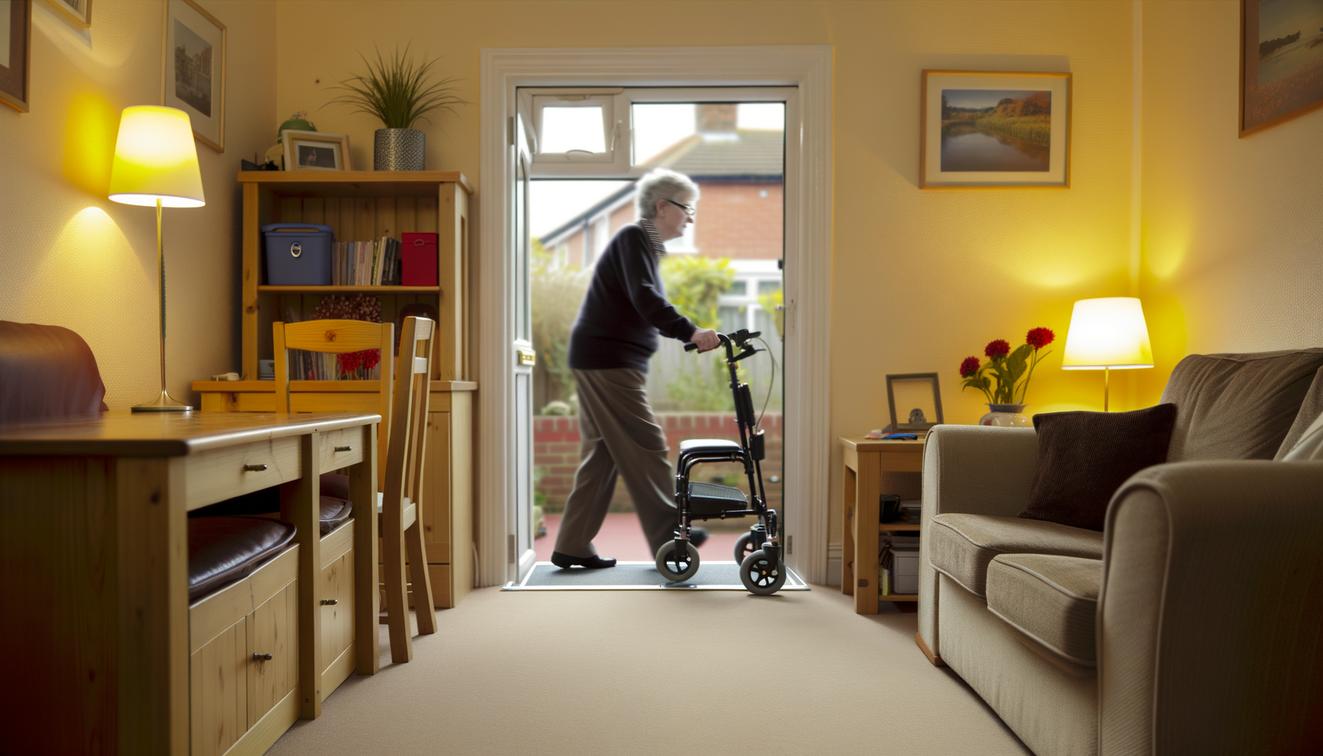
- Continuous, level access: reducing steps and abrupt level changes makes routes safer and easier for people using mobility aids or with balance impairments. Where level access is impossible, carefully specified ramps, platform lifts or threshold adjustments are used.
- Appropriate clear widths: clear door and corridor widths must allow passage of modern wheelchairs and allow carers to assist when required. Where possible, doors should provide wider clear openings than historic narrow standards.
- Reach ranges and adjustability: kitchens, storage and controls should be configured for seated and standing reach. Wherever possible, adjustable or varied-height fixtures give longer-term flexibility.
Technical details that matter
Several measurable criteria determine whether an adaptation will work in practice:
- Turning and manoeuvre: ensure a clear floor area large enough for transfer and turning. This includes unobstructed areas in front of doors, sinks, toilets and appliances.
- Ramp gradients and landings: where ramps are used, gradient and landing lengths affect usability and safety. Short, steep ramps are tiring and hazardous; gentler gradients with intermediate landings are preferable where space allows.
- Door clearances and hardware: pocket doors or outward-opening doors can increase usable width. Lever handles and low-resistance hardware reduce effort for people with limited grip.
- Sanitary layout: replacing a bath with a level-access shower often provides the greatest increase in independence for bathing. Careful positioning of grab rails and shower seats, and non-slip finishes, are essential.
- Environmental controls and lighting: glare-free, well-distributed lighting, clear contrast on steps and controls positioned at accessible heights support people with visual or cognitive impairments.
Practical constraints in retrofits
Retrofitting accessible features into existing homes involves trade-offs. Load-bearing walls constrain doorway widening. Shared ownership, listed buildings and leasehold arrangements impose legal limits on alterations. Drainage runs, soil levels and floor build-ups affect the feasibility of creating level-access showers without major structural work.
Cost and disruption are also significant factors. Some adaptations (grab rails, threshold ramps, lever handles) are low cost and quick. Others (structural doorway widening, full bathroom remodelling, creating a ground-floor bedroom) are more expensive and require planning, building-control involvement and a period of decanting or phased works.
How adaptations are typically prioritised
Occupational therapists (OTs) and designers generally prioritise interventions that deliver the greatest increase in safe, independent activity for the least cost and disruption. A common sequence is:
- Immediate safety fixes (grab rails, non-slip surfaces, improved lighting).
- Mobility & access (ramps, threshold adjustments, stairlifts where unavoidable).
- Personal care adaptations (level-access shower, accessible WC, repositioning of basins).
- Longer-term independence investments (widening doorways, creating accessible kitchens or ground-floor sleeping facilities).
Where Disabled Facilities Grants fit in
In the UK, Disabled Facilities Grants (DFGs) remain the primary source of public funding for many home adaptations. The typical process is an OT assessment to identify functional need, a local authority application and specification, and then delivery by approved contractors. Applicants often encounter waiting times, constrained local budgets and the administrative complexity of grant processing. Because DFGs are intended to meet assessed needs, their scope and timeliness can shape what adaptations are feasible and when.
Design for longevity: inclusive design versus single-user fixes
Technical design that anticipates changing needs often provides better value than short-term fixes. Inclusive design features — wider circulation, level thresholds, easily adjustable fittings — benefit householders as they age and make the property more attractive to a wider range of tenants or buyers. That said, targeted adaptations that solve a concrete problem quickly are legitimate and necessary, particularly where immediate safety or independence is at stake.
Working with professionals
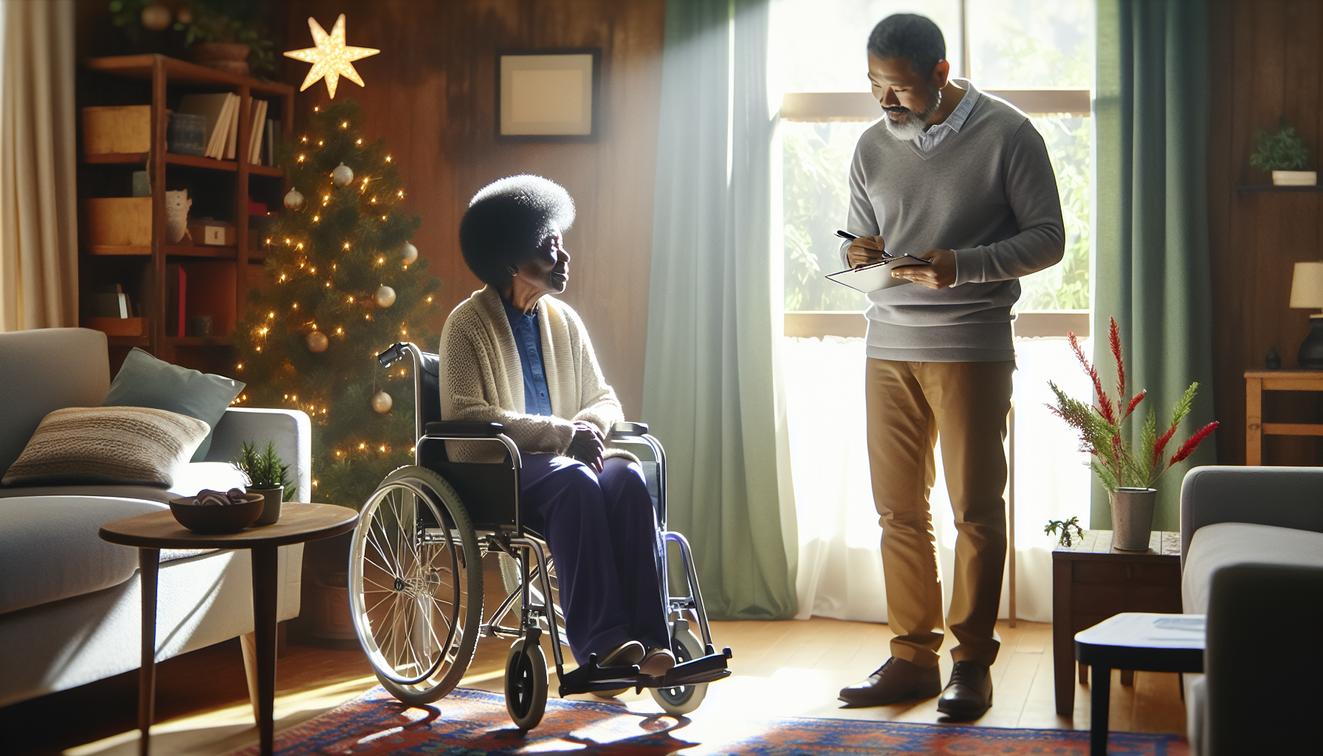
Successful adaptations typically involve a small team: an occupational therapist to assess needs, an architect or experienced adaptions designer to draw realistic plans, a knowledgeable builder or contractor familiar with accessible standards, and the local authority for DFG administration where funding is sought. Early, clear measurement and sketching of intended routes and transfer positions avoids costly rework.
Conclusion
Technically sound adaptations combine measured ergonomics, careful material choices and pragmatic sequencing of work. The goal is not just compliance with guidance but the restoration of everyday independence: safe transfers, easier bathing and cooking, and the dignity of mobility within one’s own home.
Homingo helps people and professionals bridge the gap between need and delivery: our platform lists accessible properties and filters by specific features, provides checklists and plain-English guidance for the adaptation pathway, and connects users with experienced occupational therapists and trusted contractors to translate the technical principles above into practical, deliverable works.