Introduction: The Accessibility Gap and Why It Matters
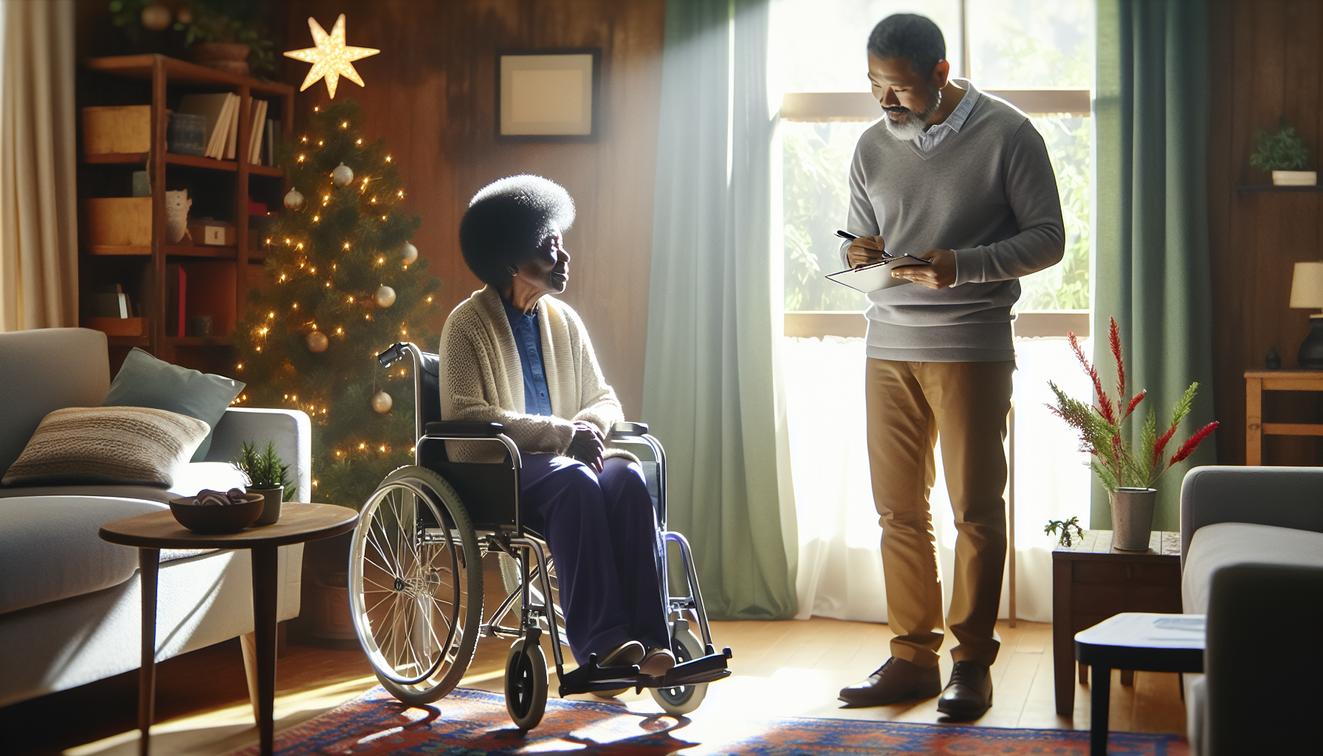
The UK housing stock was not designed with universal accessibility in mind. Millions of people want to remain independent at home as they age or live with disability, yet the reality is stark: estimates suggest fewer than 5–10% of UK homes are fully accessible for wheelchair users or meet the comprehensive needs of people with significant mobility impairments. That gap—what we call the “Accessibility Gap”—drives unnecessary moves, hospital readmissions, and loss of independence for older people and those with disabilities.
What “Accessible” Really Means
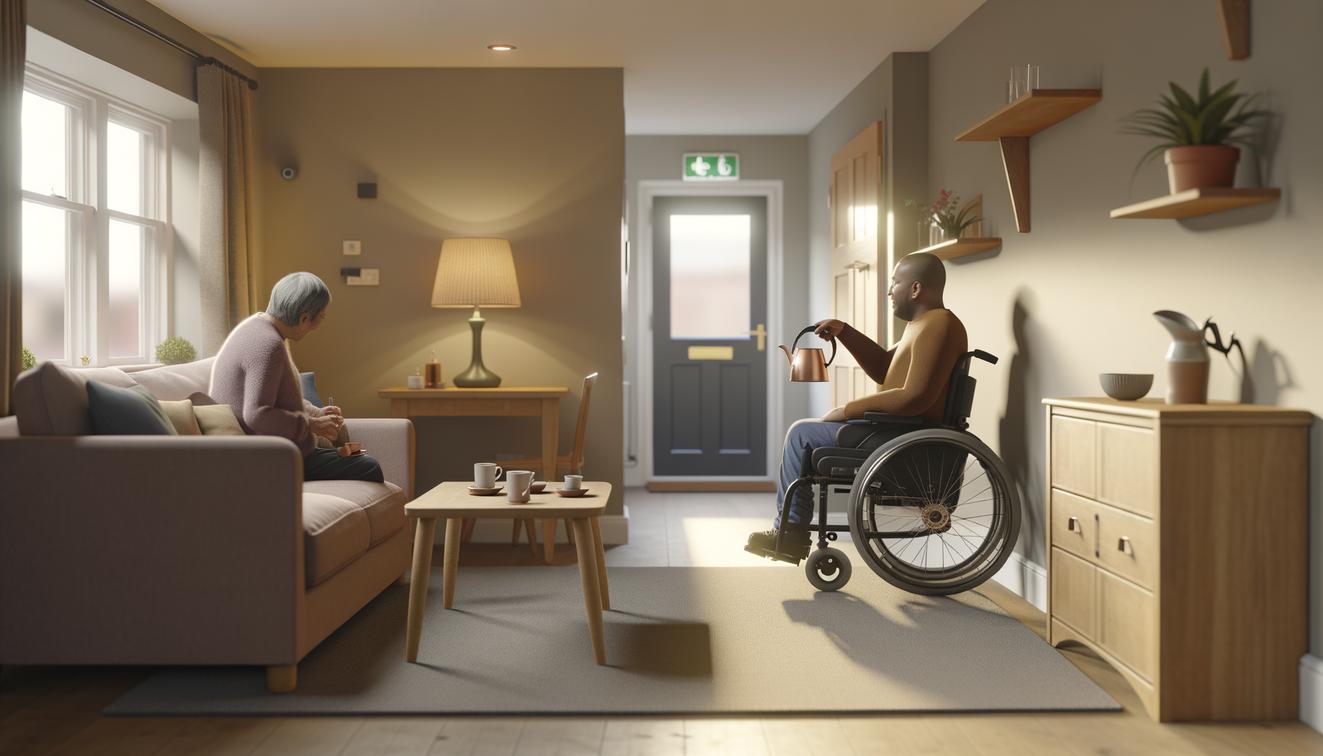
Accessibility is not one binary feature. It is a collection of characteristics that together enable a person to use a home safely, comfortably and with dignity. Features include step-free access, wide doorways, level-access wet rooms, sufficient turning space in corridors and kitchens, ramped entrances, lift access in multi-storey buildings, and the capacity to install assistive technologies.
Universal Design vs. Individual Need
Universal Design promotes environments usable by as many people as possible, but individual needs vary. A home that suits a person using a walking frame will not necessarily be adequate for a full-time wheelchair user. That difference is central to Homingo’s approach: accessibility must be personalised.
Data Snapshot: The Scale of the Challenge
Public and independent reports consistently show a mismatch between need and supply. While precise percentages vary by source and region, the consistent finding is that only a small minority of dwellings offer full accessibility for wheelchair users. Local authorities and health services report long waits for adaptations; Disabled Facilities Grants (DFGs) are available but can take months to secure and navigate.
Introducing Homingo’s Find, Adapt, Fund Model
Homingo addresses the Accessibility Gap through a three-part model designed specifically for the UK context:
1. Find — Personalised Matching
We use detailed home data and an AI-driven Accessibility Score to match people to properties that best meet their mobility profile. Rather than simple filters, Homingo applies “Human-Realism” logic: the platform scores how a home performs for a real person’s specific needs — for example, a full-time wheelchair user, someone who uses a walking aid, or a person with progressive mobility loss.
The Accessibility Score considers measured and observable features such as: door widths, threshold heights, step-free routes, bathroom layout (wet room potential), corridor width, kitchen adaptability, lift access, and the presence of level external access. It also factors in local services like proximity to healthcare and community transport.
2. Adapt — Practical, Prioritised Changes
When a property isn’t perfect, Homingo helps households and their advisers see how the home could be adapted. Our platform produces a prioritised list of practical adaptations — from low-cost solutions (grab rails, ramps, lever handles) to larger works (wet rooms, widened doors). Each adaptation is scored for impact, cost, and estimated installation time, enabling realistic planning that keeps people in their communities.
3. Fund — Navigating Grants and Finance
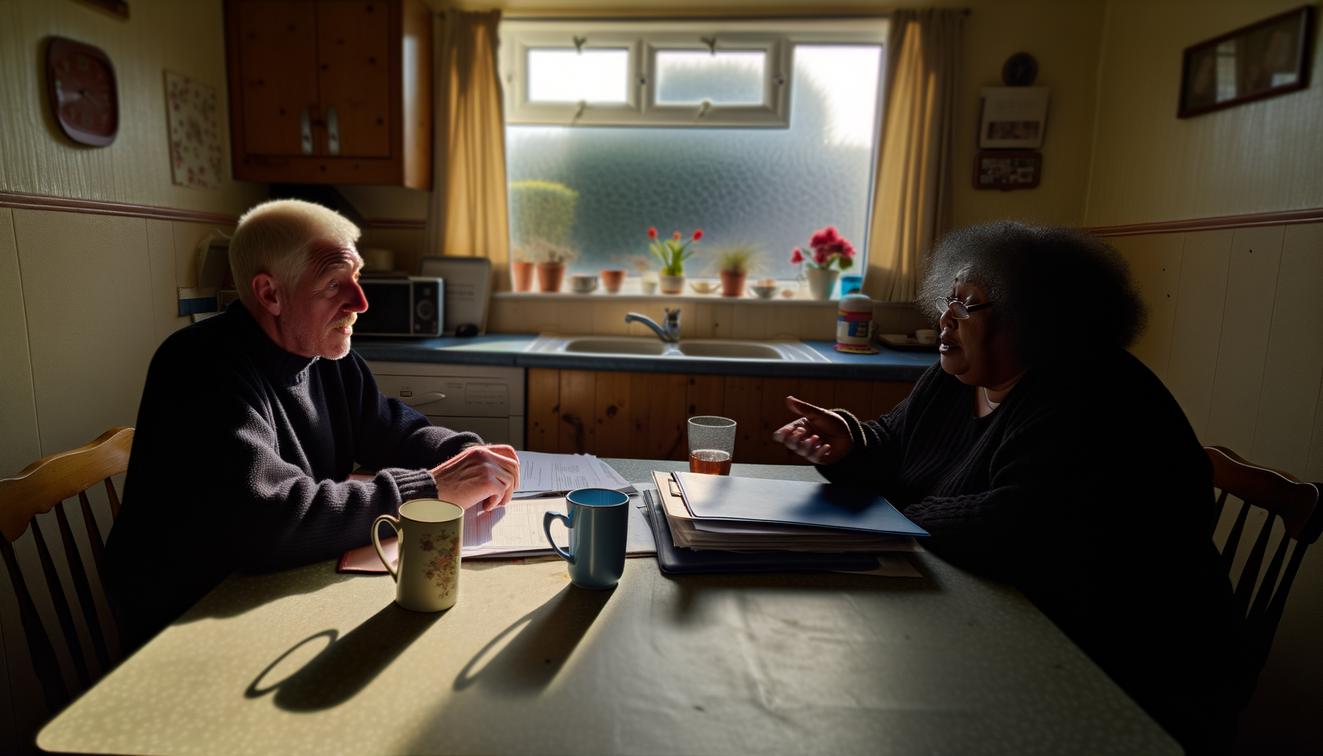
Funding adaptations is a major barrier. In England, Disabled Facilities Grants (DFGs) provide mandatory funds of up to £30,000 for eligible works, though processing can be slow and some local authorities offer discretionary top-ups. Homingo supports applicants by mapping funding routes: local authority DFGs, discretionary council funds, charitable grants, and ethical loan options. We provide document checklists, timescale guidance and introductions to trusted local contractors and occupational therapists.
Human-Realism: Moving Beyond Binary Filters
Traditional search tools use yes/no filters: is there a downstairs bedroom? Is there step-free access? Homingo’s Human-Realism scoring models simulate a person’s lived experience in a property. For example:
- Wheelchair user: scores prioritise turning circles, doorway widths, level shower access and ramped entrances.
- Walking with aid: scores emphasise grab rails, non-slip flooring, short walking routes and a downstairs WC.
The result is a ranked list of properties that truly match the person’s independence goals — not just those that match a checkbox.
How the AI Works — Ethical, Transparent, Outcome-Focused
Homingo’s AI ingests structured property data, room measurements, vendor-provided details, accessible photography and local service datasets. It weights features against user profiles developed with occupational therapists and lived-experience advisors. Crucially, the logic is explainable: every Accessibility Score is accompanied by a human-readable breakdown of strengths, weaknesses and recommended adaptations.
Real Benefits — Faster Moves, Better Outcomes
When people find better-matched homes and understand adaptation pathways and funding, outcomes improve. We see fewer avoidable hospital discharges into unsuitable housing, better mental health outcomes from staying in the community, and more cost-effective adaptation planning for social care systems.
Practical Steps for Households and Professionals
For individuals:
- Use personalised search tools that account for your mobility profile.
- Ask for measured dimensions and accessibility photos.
- Check DFG eligibility early and request an occupational therapist assessment where possible.
For professionals:
- Embed accessibility data into listings and referrals.
- Work with platforms that surface adaptation pathways and funding options.
- Prioritise outcomes-based matching to reduce re-referrals and failed moves.
Conclusion: A Practical Roadmap to Independent Living
Closing the Accessibility Gap requires practical, person-centred solutions. Homingo’s Find, Adapt, Fund model — underpinned by the Accessibility Score and Human-Realism logic — makes independent living a realistic option for many more people across the UK. If we shift from binary filters to nuanced, explainable matching and pair that with clear adaptation and funding routes, we can keep people safer, healthier and living with dignity in the homes they love.
To learn more about how Homingo matches people to accessible homes and navigates adaptations and funding, visit Homingo or contact our advisory team for a personalised consultation.