Executive summary
The UK housing stock is ageing faster than accessibility standards are being applied. Physical barriers in homes — narrow doors, steps at thresholds, inaccessible bathrooms and poorly sited controls — combine with slow grant systems and workforce shortages to create an “accessibility gap”: a measurable mismatch between people’s capabilities and their living environment. This article examines the engineering, regulatory and clinical evidence underlying that gap and explains the practical technical interventions that reduce health, social care and psychological harms.
The scale and social science of the problem
Demography is the immediate driver. The proportion of people aged 65+ in the UK has grown substantially over recent decades; this cohort has much higher prevalence of long‑term limiting illness and mobility impairment. Clinically relevant figures include that around one in three older adults fall annually, and falls are a leading cause of emergency hospital admissions among older people. Each avoided fall can prevent loss of independence and expensive hospital stays.
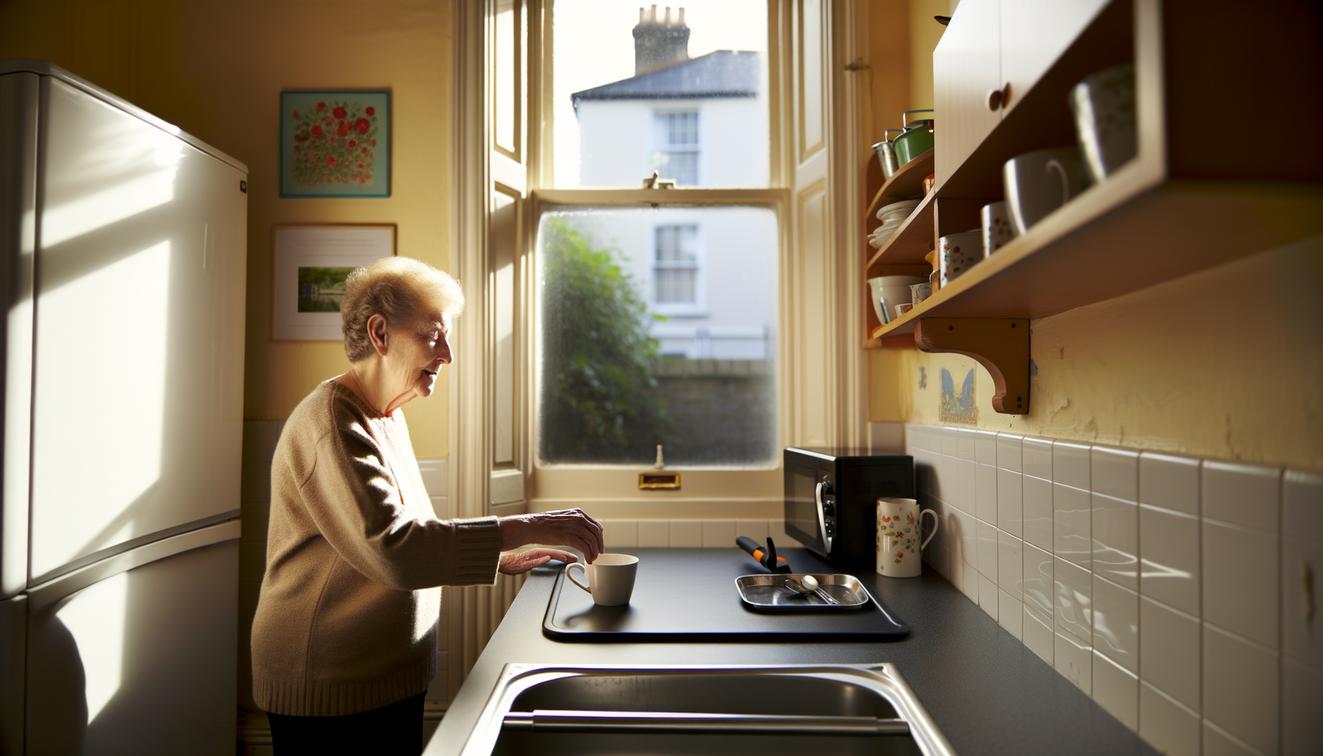
From a psychological standpoint, the ability to perform Activities of Daily Living (ADLs) independently — dressing, bathing, meal preparation — is strongly correlated with wellbeing, lower rates of depression and reduced need for domiciliary care. Environmental press theory and the disablement process model show that small architectural mismatches (a 100–200mm step, a narrow toilet room, absence of a handrail) multiply functional limitations, increasing reliance on carers or institutional moves.
Architectural barriers: what design research shows
Doorways, circulation and turning space
Modern wheelchair users and people using rollators require clear widths and manoeuvre space that most pre‑1980 dwellings do not provide. Design guidance and building regulations classify accessible dwellings and prescribe spatial minima: a 1500mm diameter turning circle in key rooms (kitchens, bathrooms) for full wheelchair independence, and door clearances typically in the 800–900mm range to permit lateral transfers and equipment access. In practice, many existing properties have internal doors of 700–750mm and narrow corridors, producing repeated manual transfers or the need for costly structural opening works.
Entrances, thresholds and gradients
Step‑free access is foundational to ageing in place. Even small upstands cause repeated minor injuries and reduce the usable housing pool for wheelchair users. Careful detailing — flush thresholds, level landing areas and slip‑resistant finishes — is frequently absent in traditional stock. External ramps and platform lifts are pragmatic retrofit solutions but introduce maintenance and weatherproofing requirements that are often underestimated at specification stage.
Sanitary and bathing provision
Traditional bathrooms are one of the most common failure points: narrow doors, small turning radii, bath tubs rather than accessible showers, and non‑reinforced walls that cannot accept grab rails. The technical response is predictable: removal of thresholds, installation of level access showers or wet rooms, reinforced studwork for future rail fittings, and attention to drainage gradients and anti‑slip finishes. These interventions range from moderate to complex building works depending on structure and existing drainage positions.
Regulation and standards: Part M and beyond
Approved Document M (Part M) of the Building Regulations provides a tiered approach for dwellings: Category 1 (M4(1) visitable), Category 2 (M4(2) accessible and adaptable) and Category 3 (M4(3) wheelchair user). These categories define measurable criteria for door widths, step‑free access, sanitary provisions and structural reinforcement. Crucially, M4(2) and M4(3) are optional standards for new build unless local planning policy requires them. The implication is twofold: (1) most existing stock predates these criteria and remains non‑compliant; (2) new supply will not reliably increase accessible stock without regulatory pull or developer incentives.
Funding, delivery and the Disabled Facilities Grant (DFG)
The Disabled Facilities Grant is the principal statutory route for funding essential home adaptations, but its delivery model creates bottlenecks. Typical steps — referral, occupational therapist (OT) assessment, specification, procurement, and building work — involve multiple organisations. Local authority capacity constraints, waiting lists for OT assessments and limits on grant budgets lead to waits that can be months long, during which risk of falls and hospital admission remains high.
Practically, straightforward adaptations (grab rails, stair grab, minor ramps) can cost a few hundred to a few thousand pounds, while major works (level‑access shower installs, through‑floor lifts, major structural reconfigurations) can run from several thousand to tens of thousands. These costs are often concentrated in a single urgent episode rather than spread as preventative spend, which is inefficient for health and social care budgets.
Technical delivery: matching solution to need
Assessment and specification
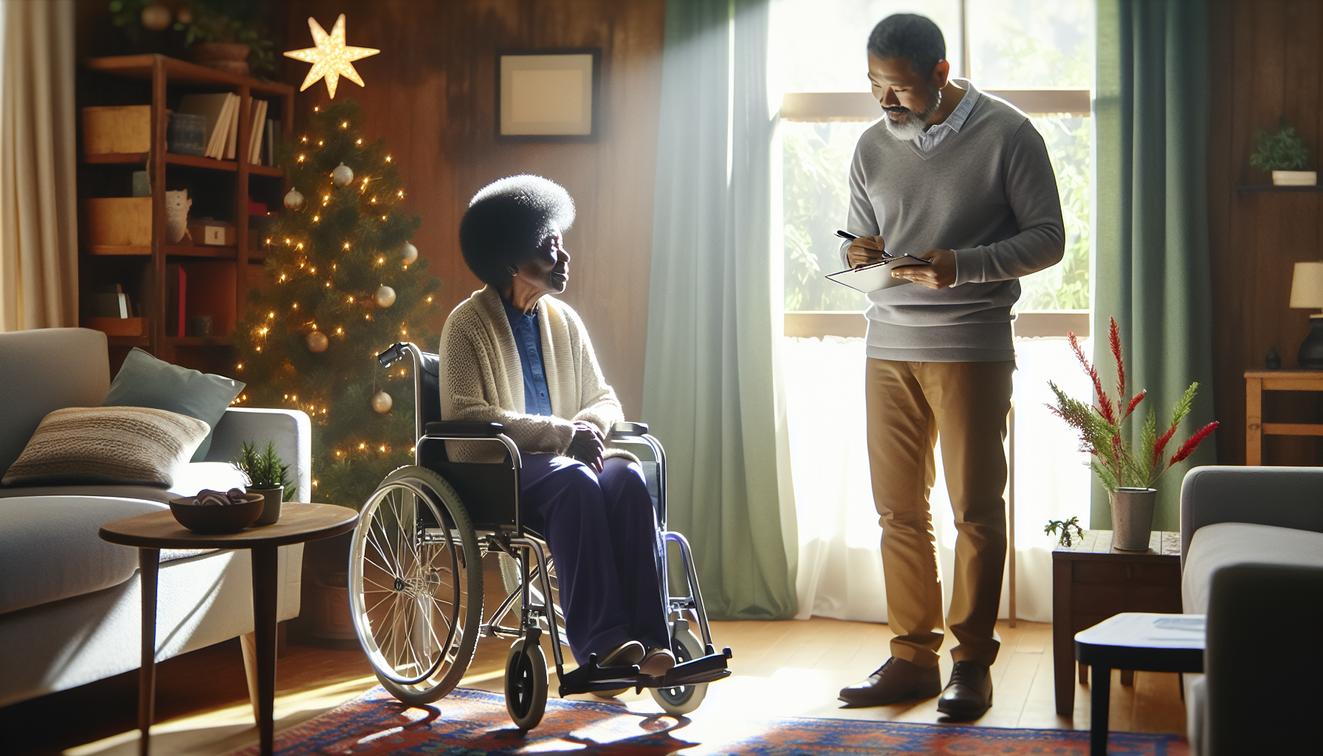
High‑quality OT assessments are technical instruments: they translate medical and functional data into spatial specifications (clear widths, lift capacities, electrical load for hoists, drainage fall) that contractors must meet. Without standardised data transfer — digital plans, annotated photographs, measured drawings — mis‑specification increases rework and cost overruns.
Retrofit constraints
Typical retrofit challenges include: load‑bearing walls that limit bathroom reconfiguration, ground conditions that affect external ramp gradients, listed building constraints, and leasehold rules that complicate communal block adaptations. Technical solutions often require interdisciplinary coordination between structural engineers, building control, and specialist installers.
Workforce, supply chain and costs
There is a shortage in the skills required to deliver adaptations at scale: experienced OT planners, tailored tradespeople and certified installers for specialist equipment. Supply chain lags for items such as through‑floor lifts or bespoke wet‑room trays push lead times out. Economies of scale are lacking because demand is dispersed across many local authorities and private households.
Prevention, economics and health outcomes
Evidence from integrated care pilots indicates that timely, modest adaptations reduce hospital readmissions and domiciliary care hours. From a systems perspective, even small investments in home modifications can delay or prevent costly residential care placements. Quantifying returns is context dependent, but the direction is clear: prevention via home adaptation can lower later high‑cost interventions.
What needs to change: policy, procurement and technical practice
Practical reforms include: mandatory minimum accessibility standards for new homes (uplift of M4(2) baseline), simplified and digitised DFG referral and specification processes, pooled capital for preventative adaptations within place‑based health budgets, and investment in OT and specialist installer training. Technically, adoption of interoperable digital templates (measured plans, photo‑documentation and standard schedules for door widening, thresholds and shower specifications) would reduce design ambiguity and procurement cycles.
Conclusion: closing the gap with coordinated science and delivery
The accessibility gap is not a single failure but a systemic one: misaligned regulation, dispersed funding, fragile supply chains and the technical complexity of retrofitting older stock. The engineering and clinical evidence establishes clear, measurable interventions that reduce falls, preserve independence and produce downstream savings. To scale these interventions requires better data flows between clinicians, local authorities and trades; clearer regulatory instruments to increase accessible supply; and targeted investment to build delivery capacity.
Platforms and technologies that standardise assessment data, automate specification into measurable building schedules and connect homeowners with certified installers can accelerate delivery. For example, platforms like Homingo are now using AI to automate this complex matching process — translating occupational therapy assessments into standardised technical specifications and matching them to local contractors and funding routes, reducing delay and specification error.